

Alpha-Gal Syndrome: The Tick-Borne Red Meat Allergy
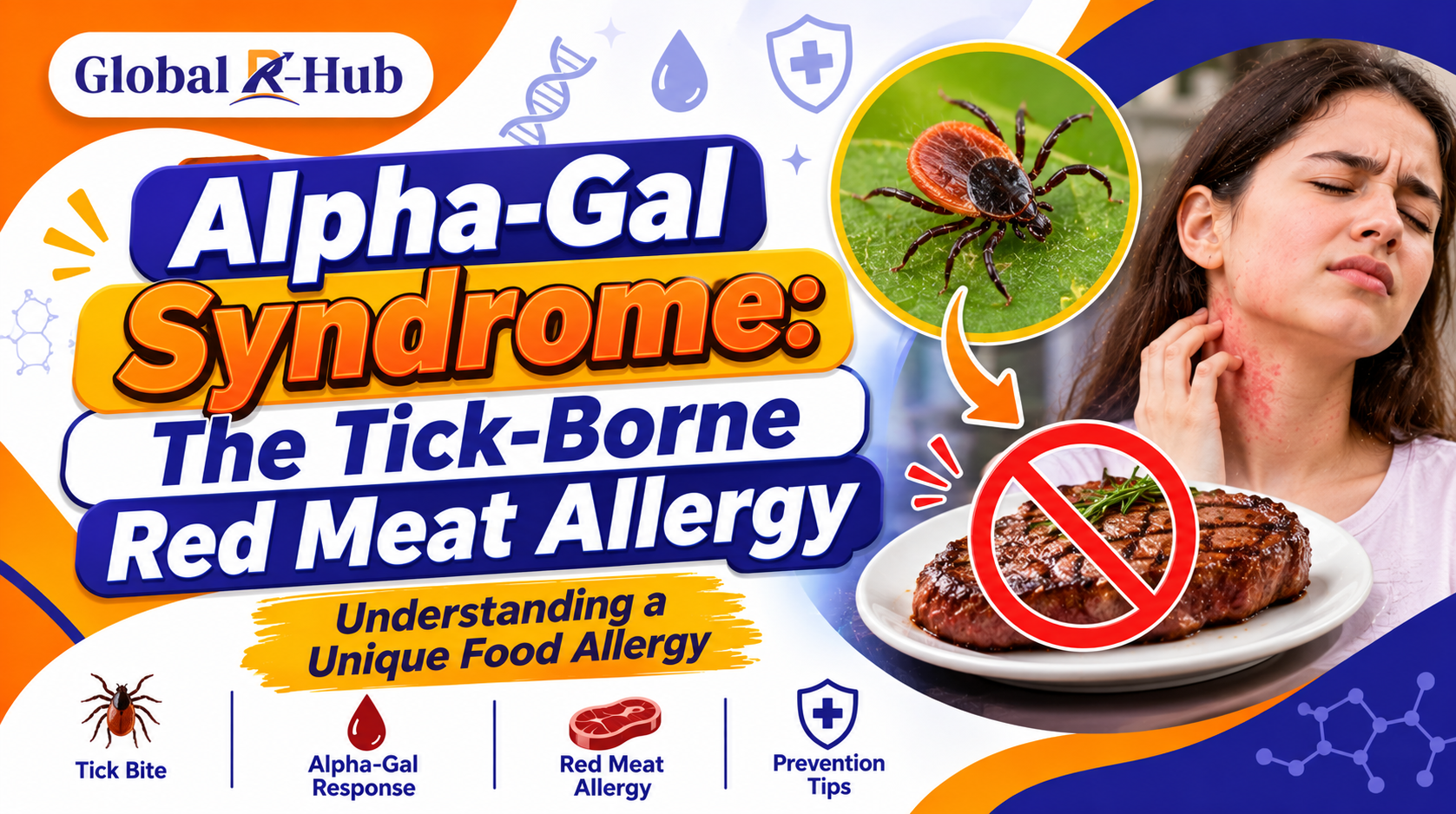
The Scientific Quest to Understand Alpha-Gal: A Tick-Borne Red Meat Allergy
For Indian high school students building portfolios in biology, medicine, immunology, or public health for university admissions, discoveries that overturn textbook assumptions are among the richest areas to explore. When headlines examine the scientific quest to understand alpha-gal, a tick-borne allergy to red meat, students and parents often wonder how a bite from an insect-like arachnid can reprogram the immune system against everyday mammalian foods and why symptoms appear hours later instead of immediately. Exploring how researchers solve this immunological puzzle gives ambitious students a clear, lab-free way to conduct biomedical and epidemiological research.
At a Glance: What Makes Alpha-Gal Syndrome Unique
The Allergen: Alpha-gal (galactose-alpha-1,3-galactose) is a carbohydrate molecule found in the cells and tissues of most non-primate mammals (including cattle, pigs, sheep, and goats), but absent in humans and other primates.
The Trigger: Bites from certain tick species introduce alpha-gal alongside immunomodulatory tick-saliva compounds, prompting the human immune system to produce alpha-gal-specific IgE antibodies.
The Delayed Reaction: Unlike classic protein-based food allergies that strike within minutes, alpha-gal reactions typically occur 2 to 6 hours after eating mammalian meat, largely because dietary fats and glycolipids take longer to digest and enter the bloodstream.
High School Research Fields: Immunology & Allergology, Vector-Borne Epidemiology, Glycobiology & Molecular Biology, and Public Health Data Analysis.
Why Alpha-Gal Puzzled Immunologists
For decades, immunology textbooks taught two core rules about severe food allergies: allergens are almost always proteins, and IgE-mediated reactions happen within minutes of exposure. Alpha-gal syndrome broke both rules at once.
Researchers first noticed the pattern while investigating severe allergic reactions to a cancer antibody drug (cetuximab) that carried alpha-gal sugars, alongside patients reporting unexplained night time hives or anaphylaxis hours after eating dinner. Connecting those cases to geographic tick distributions revealed a vector-borne mechanism: when specific ticks feed, components in their saliva appear to bias local immune cells toward producing IgE antibodies against alpha-gal, sensitizing the person to future dietary or medical exposures.
Comparing Classic Food Allergies vs. Alpha-Gal Syndrome
Contrasting conventional food allergies with alpha-gal syndrome helps students see how molecular structure and digestion kinetics shape clinical symptoms.
Feature | Classic IgE Food Allergy (e.g., Peanut, Shellfish) | Alpha-Gal Syndrome (Tick-Borne Meat Allergy) |
Molecular Target | Specific food proteins | A sugar molecule (galactose-alpha-1,3-galactose) attached to fats or proteins |
Primary Sensitization Route | Oral, skin, or respiratory exposure to the food protein | Bites from specific tick species carrying alpha-gal and saliva co-factors |
Typical Onset Timing | Rapid usually within minutes to under 1 hour | Delayed commonly 2 to 6 hours after eating mammalian meat |
Broader Exposure Sources | Direct food ingredients and cross-contact | Mammalian meat, gelatin, dairy products, and certain mammalian-derived medical products |
What This Means for High School Students in India
Vector-borne diseases, tick ecology, and emerging allergies are major research priorities across global health and biomedical science including surveillance of tick-borne pathogens across India's diverse ecological zones. High school students in India do not need wet-lab biosafety facilities or clinical patient samples to study immunology and vector ecology.
Conducting a systematic literature review, molecular-database comparison, or epidemiological mapping project in grades 9–12 builds strong analytical rigor for pre-medical and life-science university applications.
How High School Students Can Research Immunology & Vector-Borne Allergies (Without a Lab)
You can build a structured, reproducible biomedical or epidemiological research paper on a standard laptop using open scientific databases and literature archives.
Step 1: Gather Peer-Reviewed Literature and Open Biomedical Data
Start with verifiable, publicly accessible scientific repositories:
Search peer-reviewed immunology and clinical case-series papers on PubMed and Europe PMC, explore carbohydrate and protein structures in UniProt or PubChem, and review vector-ecology records from the CDC, WHO, or GBIF (Global Biodiversity Information Facility).
Define a focused research question such as comparing onset times and clinical triggers across published alpha-gal case series, or examining how geographic climate variables correlate with tick-habitat distributions.
Step 2: Synthesize Data or Map Vector Distributions in Python
Use Python (Pandas, NumPy, SciPy, and Matplotlib) or structured evidence tables to test a clear hypothesis:
Extract standardized variables from published studies (such as symptom-onset delay, diagnostic IgE thresholds, or co-factors like exercise and alcohol) and summarize patterns statistically.
Or analyze open tick-occurrence records alongside temperature and humidity datasets to study environmental conditions linked to vector range shifts.
Step 3: Turn Your Findings Into a Structured Research Paper
Selective university admissions committees and student STEM journals value a clear biological question, transparent literature-search or data-filtering criteria, accurate molecular explanations, and an honest discussion of clinical limitations. Browsing curated research project ideas can help you narrow a broad interest in medicine or biology into a focused high school study. If you want guidance from doctoral mentors to refine your methodology and prepare a manuscript for vetted recommended journals, consider applying to the High School Scholar Program.
Frequently Asked Questions
What is alpha-gal syndrome?
Alpha-gal syndrome is a tick-borne allergic condition in which the immune system produces IgE antibodies against the sugar molecule galactose-alpha-1,3-galactose, causing delayed allergic reactions after consuming red meat or other mammalian-derived products.
Why do alpha-gal allergic reactions happen hours after eating?
Unlike protein allergens absorbed quickly into the bloodstream, alpha-gal is often bound to dietary lipids and glycolipids that take several hours to digest and circulate, delaying symptom onset by roughly 2 to 6 hours.
Does alpha-gal only affect red meat?
While mammalian meat (such as beef, pork, and lamb) is the most common trigger, some sensitive individuals also react to dairy products, gelatin, or medical products derived from mammals.
How can high school students research immunology or vector-borne diseases without a lab?
Students can conduct structured literature syntheses using PubMed, analyze molecular databases like UniProt and PubChem, or map open tick-habitat datasets in Python on a standard laptop.