

How Singing Lemurs of Madagascar Inspire Bioacoustics Research
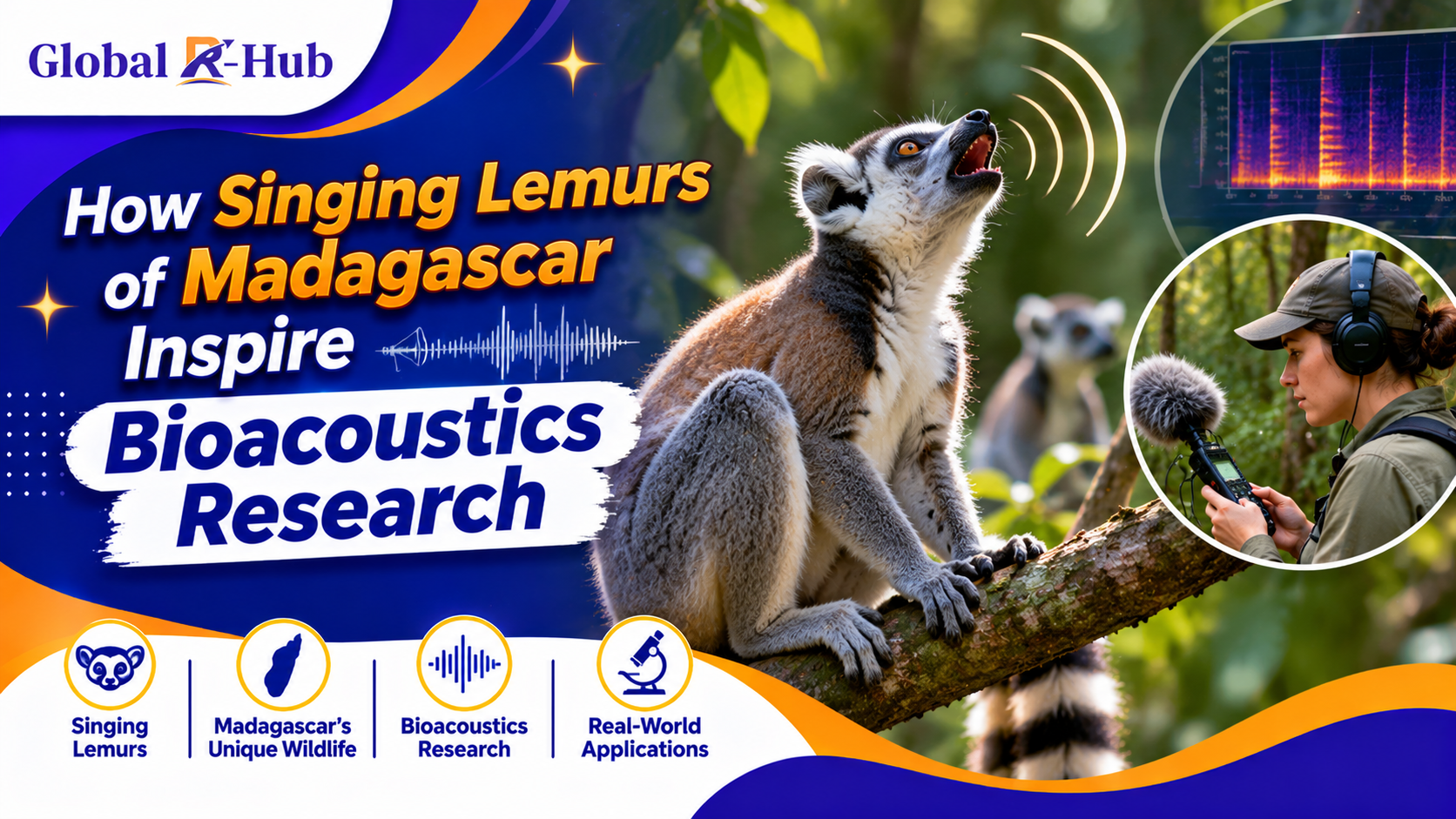
The Opera-Singing Lemurs of Madagascar
For Indian high school students building portfolios in biology, ecology, data science, or cognitive science for university admissions, animal communication is one of the most compelling frontiers in modern science. When headlines highlight the opera-singing lemurs of Madagascar, students and parents often ask how a forest primate produces haunting, soaring songs and what researchers actually measure in the field. Exploring how scientists study lemur vocalizations gives ambitious students a clear, lab-free way to investigate bioacoustics and behavioral data.
At a Glance: Why Scientists Study Singing Indris
The Species: The indri (Indri indri) is the largest living lemur and the only known singing lemur species, native to the rainforests of Madagascar.
How Their Songs Work: Indris sing in coordinated duets and group choruses that carry across dense forest canopy, helping group members stay in contact and signaling territorial boundaries.
Vocal Mechanics & Rhythm: Researchers have analyzed video and audio recordings to study how mouth opening scales with higher pitch similar to human vocal projection as well as rhythmic timing intervals in their calls.
High School Research Fields: Bioacoustics & Animal Behavior, Evolutionary Biology, Acoustic Signal Processing, and Conservation Science.
How Researchers Study Song and Sound in the Wild
Recording wildlife in dense rainforests requires patience, careful field equipment, and quantitative analysis. Because sound travels through leaves and terrain differently than open air, animals that communicate over long distances must project clearly and coordinate signals across group members.
In bioacoustics research, scientists convert audio recordings into spectrograms visual maps of frequency (pitch) and amplitude over time—and measure timing intervals between syllables or calls. Combined with frame-by-frame video tracking of facial and jaw movement, these measurements let biologists test hypotheses about how physical anatomy shapes vocal projection and social coordination.
Comparing Approaches to Bioacoustic & Behavioral Research
Looking at how different methods study vocal communication helps students see how biologists turn raw recordings into evidence.
Research Approach | Primary Data Used | What It Helps Scientists Answer |
|---|---|---|
Acoustic & Spectrogram Analysis | Field audio recordings, pitch contours, and timing intervals | How frequency, call duration, and rhythmic spacing vary across calls or individuals |
Kinematic & Video Tracking | Frame-by-frame movement of mouth opening, posture, or body cues | How physical gestures and mouth aperture relate to changes in vocal pitch |
Behavioral & Ecological Context | Group composition, territorial spacing, and habitat conditions | Why animals sing together, respond to neighbors, or adapt calls to noisy environments |
What This Means for High School Students in India
India is home to extraordinary acoustic biodiversity from bird vocalizations and frog choruses in the Western Ghats and Northeast to bioacoustic monitoring of forest ecosystems. High school students in India do not need an expedition to Madagascar or expensive laboratory hardware to study animal sound and rhythm.
Analyzing open bioacoustic datasets in grades 9–12 builds hands-on skills in signal processing, statistics, and scientific writing that stand out strongly in university applications.
How High School Students Can Research Bioacoustics (Without a Lab)
You can build a structured, reproducible bioacoustics or behavioral-ecology research project on a standard laptop using free datasets and Python.
Step 1: Gather Open Bioacoustic Recordings and Metadata
Start with verifiable, publicly accessible sound and wildlife archives:
Explore open animal-sound repositories such as Xeno-canto, Macaulay Library, or open academic bioacoustic datasets, paired with conservation and ecology notes from IUCN or Movebank.
Define a clear, narrow research question such as comparing call duration or peak frequency across species, habitats, or times of day.
Step 2: Analyze Sound Features and Timing in Python
Use Python (Librosa, SciPy, NumPy, Pandas, and Matplotlib) to test a measurable hypothesis:
Generate spectrograms and extract quantitative features like fundamental frequency, syllable duration, or inter-onset intervals between sound units.
Compare distributions across categories using clear statistical summaries and well-labeled plots while documenting background noise and sample-size limits.
Step 3: Turn Your Findings Into a Structured Research Paper
Selective university admissions committees and student research journals value a focused research question, transparent acoustic measurements, reproducible scripts, and an honest discussion of recording limitations. Browsing curated research project ideas can help you narrow a broad interest in biology or data science into a focused high school study. If you want guidance from doctoral mentors to refine your methodology and prepare a manuscript for vetted recommended journals, consider applying to the High School Scholar Program.
Frequently Asked Questions
Which lemur is known for singing in Madagascar?
The indri (Indri indri) is the largest living lemur and the only known singing lemur species, living in the rainforests of Madagascar.
Why do indris sing in the forest?
Indris produce loud songs and duets that carry across dense forest to coordinate with group members and signal territorial boundaries to neighboring groups.
Do singing lemurs literally perform human opera?
No comparisons to opera singers are metaphors for how vocal projection and mouth opening interact with pitch, whereas scientists study measurable acoustic and rhythmic features in the animals' natural calls.
Can high school students do a bioacoustics research project at home?
Yes. Students can download open animal-sound recordings and analyze spectrograms, call timing, or acoustic features using Python on a standard laptop.
This video lets you hear an actual wild indri song recorded in a Madagascar reserve so you can connect the acoustic features discussed in the article to real field audio.