

How to Spot and Avoid Predatory Journals in 2027
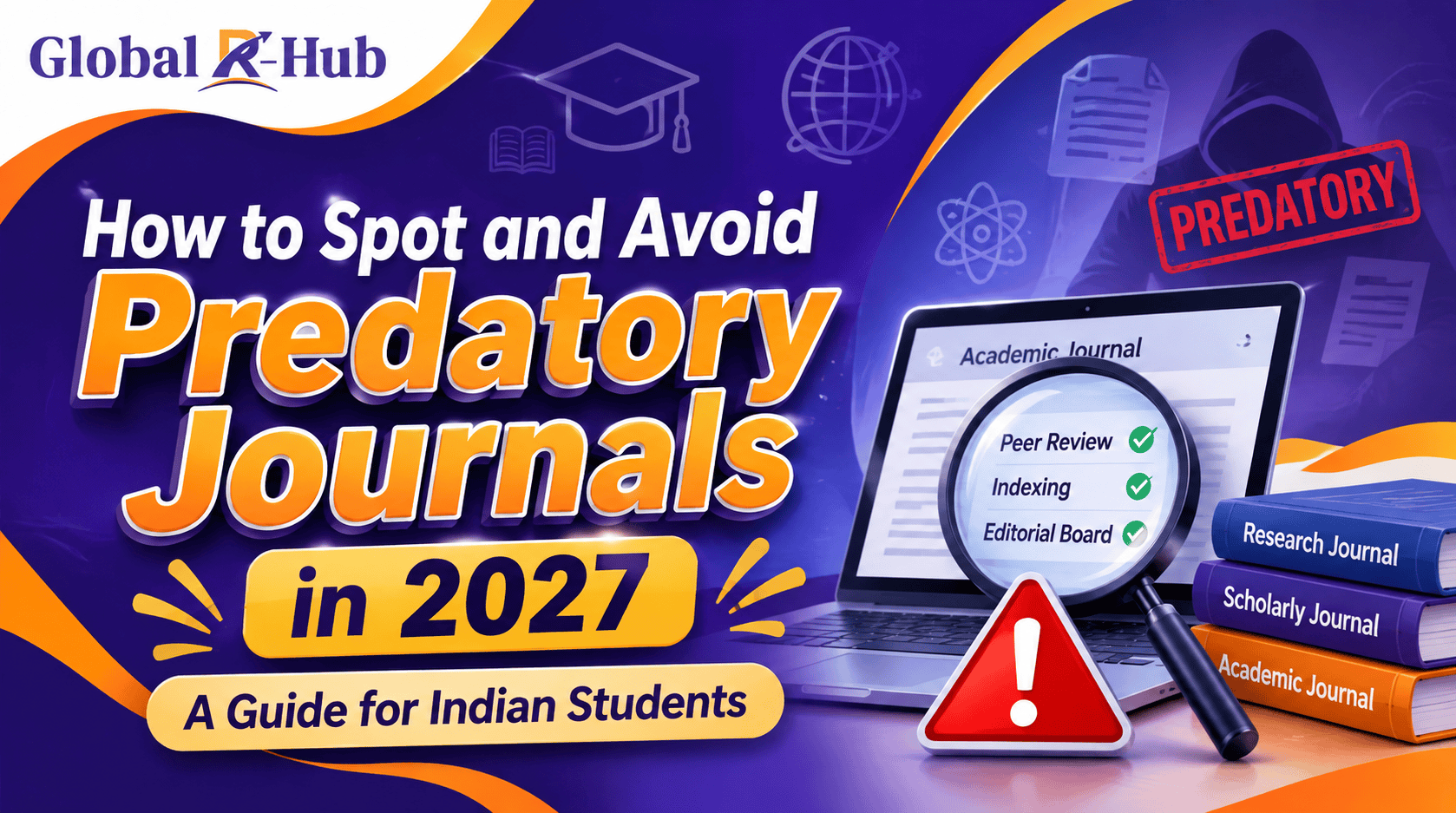
How to Spot and Avoid Predatory Journals in 2027: A Guide for Indian Students
For Indian graduate students, B.Tech, M.Sc., and Ph.D. candidates rushing to build an academic profile in 2027, publishing a research paper is a major milestone. However, the rapid expansion of open-access publishing has created an underground market of predatory publishers looking to exploit inexperienced researchers. Learning how to avoid predatory journals is essential to protecting your academic reputation, ensuring your hard work is indexed in legitimate databases, and preventing financial loss from hidden article fees.
At a Glance: Red Flags of Predatory Publishing
Peer Review Timeline: Guaranteed acceptance or peer review completed in under 72 hours.
Financial Transparency: Article Processing Charges (APCs) demanded before the manuscript undergoes peer review.
Editorial Board Integrity: Board members listed without their consent or institutions that cannot be verified online.
Why Predatory Journals Target Graduate Students in India
Predatory publishers deliberately target students and early-career researchers in developing research hubs like India. Universities across the country increasingly mandate journal publications for thesis submissions, post-graduate degrees, and academic promotions. Under immense pressure to meet deadlines, students often search for fast-track publishing options without realizing the long-term damage of falling for a fake journals list or fraudulent publisher.
When you publish in a predatory journal, your work undergoes little to no peer review. It is not indexed in reputable databases like Scopus or Web of Science, meaning international admissions committees, future employers, and PhD review boards will not recognize the publication. Worse, paying fees to a predatory publisher wastes financial resources and associates your name with compromised academic integrity.
How to Check If a Journal Is Genuine
Protecting your research requires a systematic verification process before you submit a single manuscript word. Never rely solely on a journal's claims or promotional emails. Instead, use objective verification frameworks.
1. Consult Official Indexing Databases Directly
Never trust a journal's claim of being "Scopus-indexed" or "Web of Science-listed" based solely on a badge on their homepage. Predatory journals frequently display fake indexing logos. Always open the official Scopus Source List or the Clarivate Master Journal List directly, search for the journal's exact ISSN, and verify its active indexing status. If a journal claims indexing but is missing from the official database, it is predatory.
2. Verify Against the UGC-CARE List Guidelines
For researchers in India, the University Grants Commission established the UGC-CARE (Consortium for Academic and Research Ethics) reference list to categorize quality journals. Always cross-reference prospective targets against official UGC-CARE protocols to ensure the publication meets domestic academic evaluation standards. Avoid any journal that claims UGC-CARE approval while operating outside official verification portals.
3. Scrutinize the Editorial Board Credibility
Legitimate journals proudly display active, internationally recognized experts on their editorial boards. Predatory journals often list fake names, deceased scientists, or real researchers who have been added without their permission. Take five minutes to search the institutional affiliations of the listed editors. If their faculty profiles do not mention their association with the journal, or if the board covers wildly unrelated disciplines under a single umbrella, exercise extreme caution.
4. Investigate the Peer Review and Publication Timeline
Rigorous peer review takes months. Evaluating an academic manuscript, sending it to anonymous domain experts, receiving revisions, and re-evaluating takes time. If a journal guarantees peer review completion within 48 hours or promises publication within one week, it is operating as a "pay-to-publish" mill rather than a legitimate academic outlet.
5. Check the Transparency of Article Processing Charges (APCs)
Open-access publishing legitimately relies on Article Processing Charges to cover open-web hosting costs. However, genuine journals state their fees transparently on their website before submission. Predatory journals hide their fees, tricking you into submitting your manuscript, and then demand exorbitant APC payments after issuing a fake acceptance notice, threatening you with copyright laws if you try to withdraw.
Using the Think. Check. Submit. Framework
When evaluating an unfamiliar journal, experienced researchers rely on the global Think. Check. Submit. initiative. This practical framework provides a step-by-step checklist to evaluate publisher authenticity:
Think: Are you confident about the credentials of the journal you are submitting to? Can you easily find and verify the publisher's contact details, physical address, and editorial board?
Check: Do colleagues or mentors recognize the journal? Can you find articles from this journal cited in other reputable papers within your field? Is the publisher a recognized member of industry bodies like the Committee on Publication Ethics (COPE)?
Submit: Only proceed with submission if you can verify that the journal provides transparent peer review, clear archiving policies, and legitimate indexing.
For students who have completed their data collection and are preparing their manuscripts for international submission, navigating publication ethics can be complex. The Graduate Scholar Program provides rigorous mentorship, guiding graduate students through methodological validation, ethical compliance, and manuscript formatting specifically tailored for recommended journals. By working alongside active university faculty, you ensure your research targets high-impact, peer-reviewed venues while avoiding predatory traps entirely.
Frequently Asked Questions
What happens if I accidentally publish in a predatory journal?
If you realize your paper is in a predatory journal, you should formally request a manuscript retraction due to ethical concerns, though predatory publishers often ignore these requests. Moving forward, do not list the paper on official CVs submitted for international university admissions or grant applications, as committee reviewers will penalize compromised credentials.
Are all open-access journals predatory?
No. Open-access publishing is a legitimate, highly respected model used by top-tier publishers like Nature Portfolio, Elsevier, and Springer. The distinction lies in quality control: legitimate open-access journals enforce rigorous peer review and transparent pricing, whereas predatory journals care only about collecting fees.
How can I find a legitimate journal for my research topic?
You can utilize journal finder tools provided by major academic databases, such as the Elsevier Journal Finder or Springer Journal Suggester, by inputting your abstract and keywords to generate a list of verified, peer-reviewed journals actively publishing in your specific academic subfield.